


If you are under a house or up on a roof when the phone rings, you have two choices. Stop working, or let it go to voicemail. Most callers do not leave a voicemail. They call the next number on the list.
An AI phone receptionist is one way out of that. This post covers what one actually does, what it cannot do, and how to tell if it is worth it for your shop. For why answering fast matters so much, start with why contractors lose jobs to faster competitors.
What it does on a call
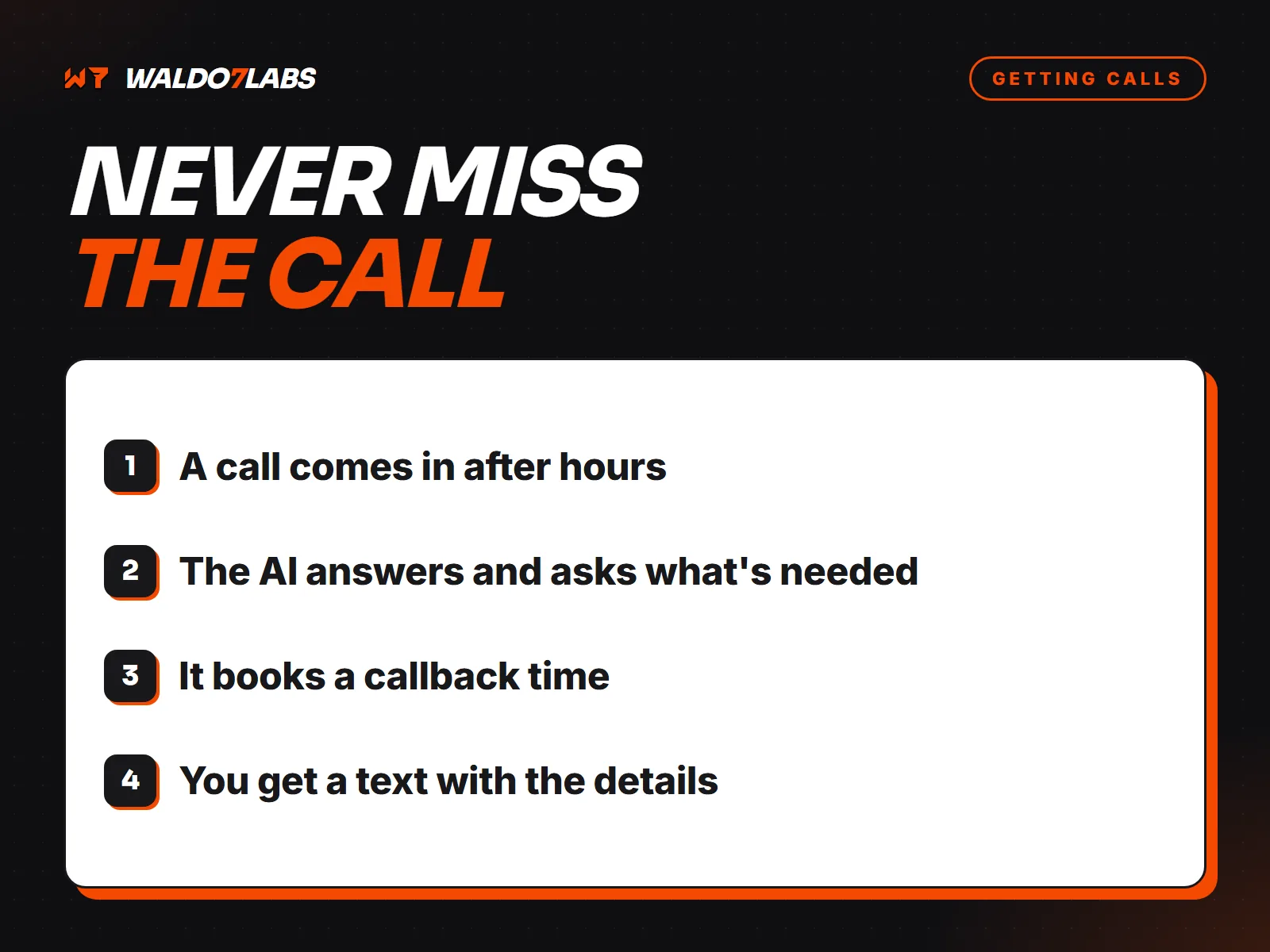
A voice assistant answers your business line in a natural voice, at any hour. A good setup will:
- Say up front that it is an assistant, then ask what the caller needs.
- Answer common questions from what you give it: service area, hours, what you do and do not handle.
- Take the name, number, address and a short description of the job.
- Put a callback or estimate on your calendar, if you want it to.
- Text you a summary so you can call back between jobs.
- Put true emergencies straight through to your cell.
What it should not do
It should not quote prices you cannot stand behind, promise arrival times, or pretend to be you. Keep it to taking the details and booking the next step. You still close the job.
It also needs rules. Decide what counts as an emergency, which calls come through to you, and what it says when it does not know. Most of the work in a good setup is writing those rules, not the technology.
How it compares to the other options
- Voicemail: free, and most callers hang up on it.
- Missed call text back: cheap and effective. A text goes out automatically when you miss a call. Start here if you have nothing.
- Answering service: a real person, but they know little about your trade and usually just take a message.
- Office help: the best option once you have the volume to justify a salary.
- AI receptionist: answers every call, knows your details, books time, and costs far less than a person. It is not a person, and some callers will notice.
Is it worth it for you?
Count your missed calls for two weeks. Your phone's call log shows them. If you miss one or two a week, missed call text back is probably enough. If you miss several a day, or a lot of calls come after hours, an assistant starts to make sense.
Then run your own numbers. Your average job value, times the missed calls you would likely have booked. Compare that with the monthly cost.
What setup looks like
- You keep your business number. Calls forward to the assistant when you want them to: always, after hours, or when you do not pick up.
- You write down what it should know: services, towns, hours, and your answers to the questions you hear every week.
- You set the rules for emergencies and transfers.
- You make test calls together and adjust until it sounds right.
Hear one before you decide
My own business line is answered this way. Call (980) 222-1163 and the assistant picks up in my voice, says it is an assistant, and can book a real time on my calendar or take a message. It is the same kind of setup I build for local businesses. More on the AI assistants page.