A good looking website that does not turn visitors into calls is a brochure. This is the setup I build into service business sites, one piece at a time, with what each piece does and what it costs. You do not need all of it. Start at the top and stop when the phone is busy enough.
If you want to find what your current form is dropping first, start with where your website form is losing leads.
1. A number you can tap on every page
On a phone, your number sits at the top of every page and dials with one tap. Someone who has decided to call should never have to scroll to find it. This comes with every site.
2. A short form that emails you
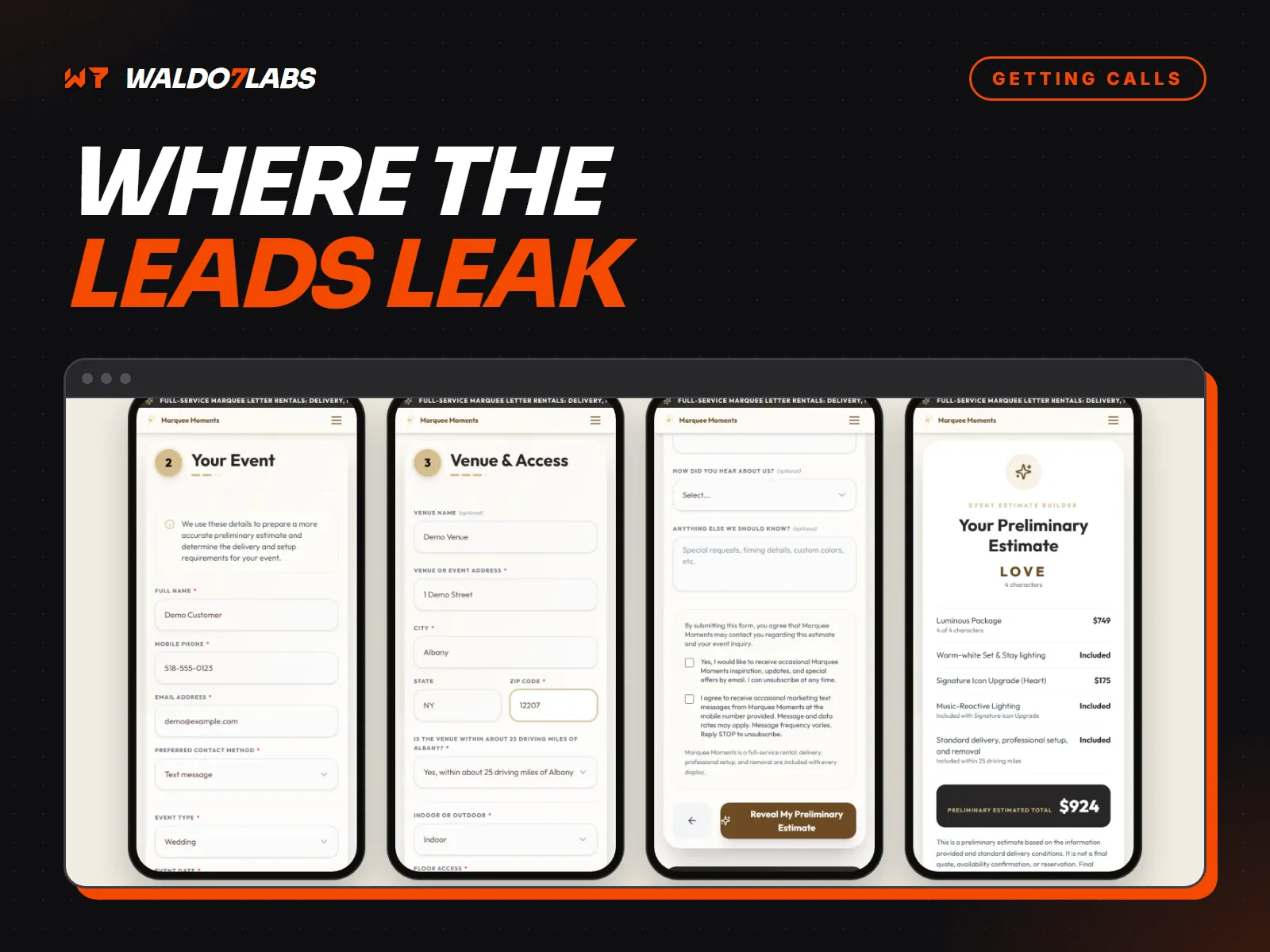
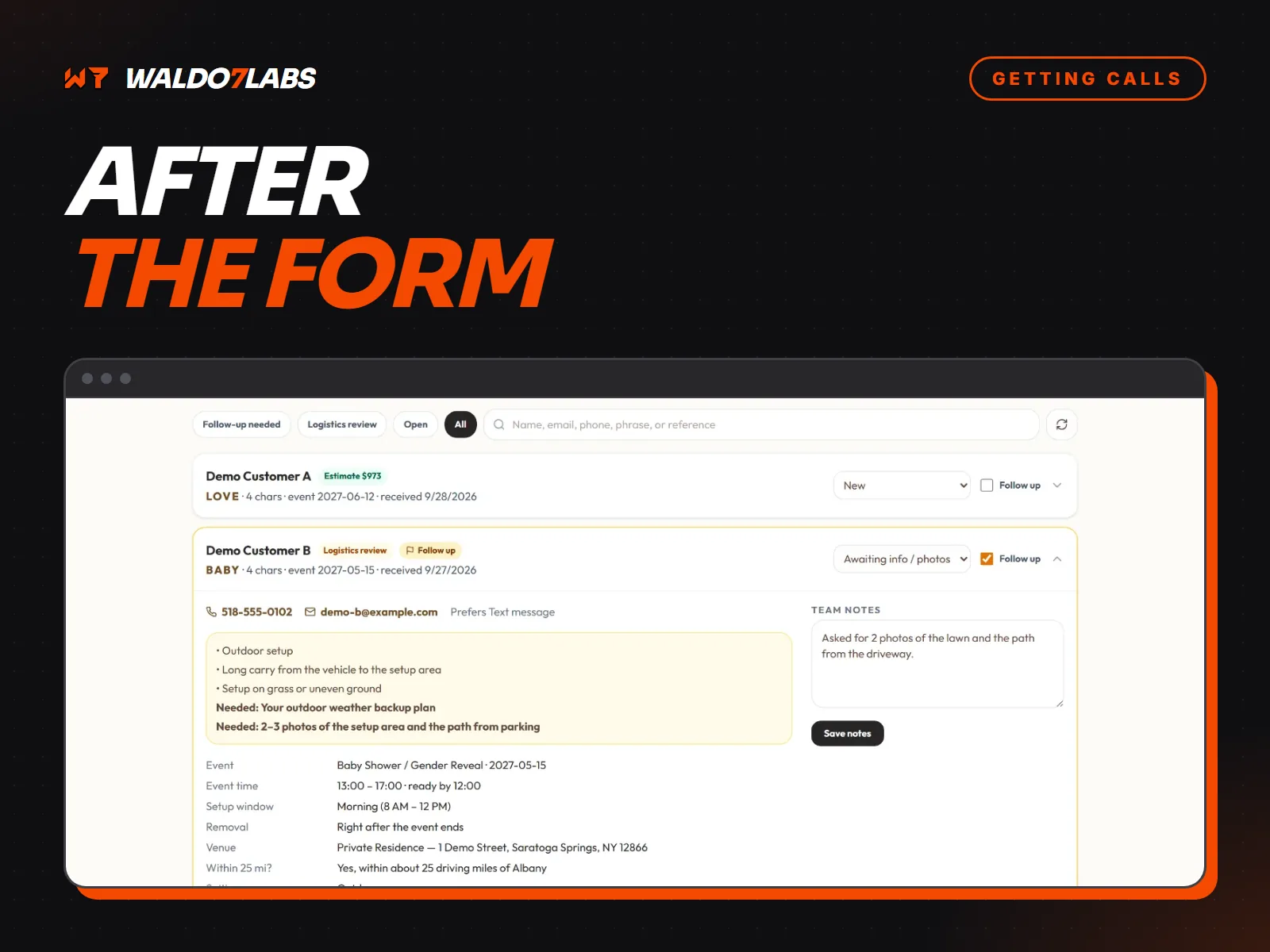
Name, phone, what they need, and an optional photo. Each request lands in your email with the photos attached, so you can call back from the job. This comes with every site too.
3. Hours people can trust
A customer who sees "open" and gets voicemail moves on. Live Hours shows open or closed right now, with holiday hours set by date, so nobody calls on Thanksgiving and gives up on you. Also included with every site.
4. Someone to pick up the calls you miss
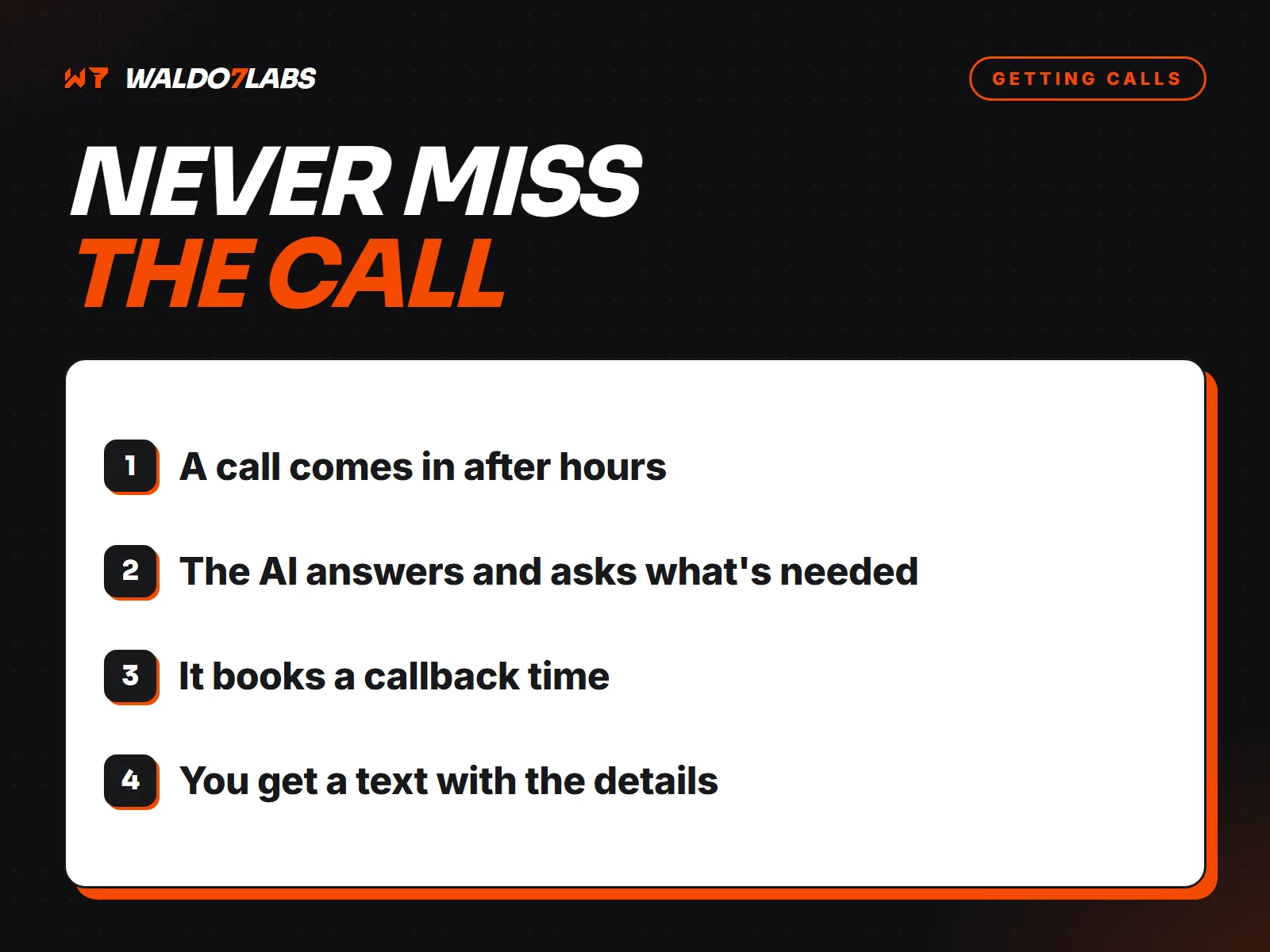
You are under a house or up a ladder and the phone rings. The phone helper picks up the calls you miss on your own number, takes the message or the order, and emails it to you right away. It starts at $79 a month, setup included, no contract.
Some people would rather type a question, like "do you come out to Stanley?" The chat helper answers on your site from your own info and takes their name and number when they are ready. It is $295 to set up, then $29 a month.
Not sure an AI on the phone fits your trade? AI phone receptionists for contractors covers when it pays off and when it does not.
5. Booking for jobs with a set length
Estimates, inspections and tune ups do not need a phone call to schedule. Online booking lets customers pick a real open time, and you both get an email. It is a flat $149 add on.
6. A deposit to hold the day
A deposit turns "maybe Tuesday" into a booked job. You get a deposit button on your site and pay links you can send from your phone, paid to your own bank through Stripe. It is $295 one time.
7. One list of every job, with follow ups that send themselves
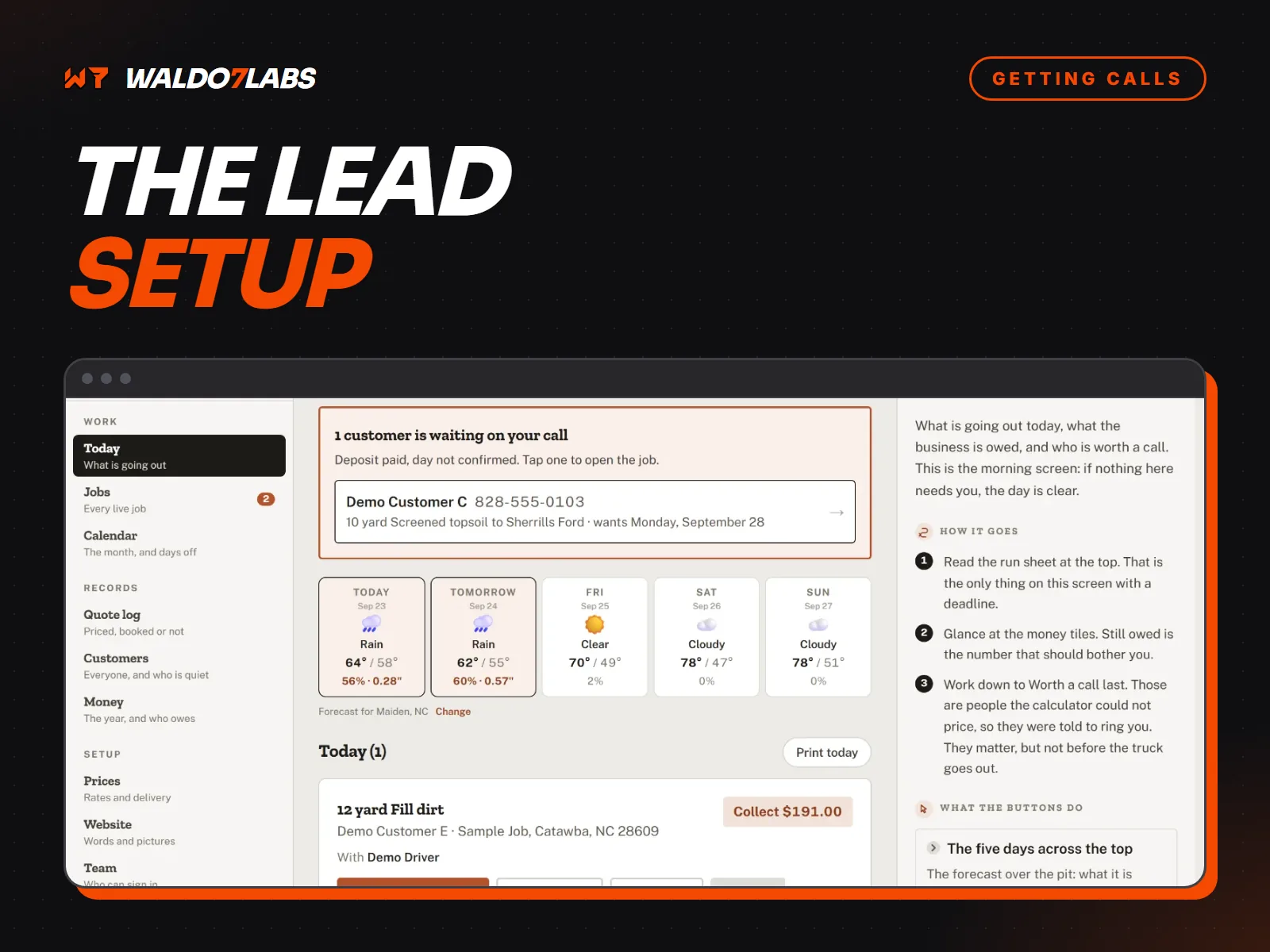
This is the big step, and most businesses do not need it on day one. A Business System puts quotes, deposits, customers and your calendar in one dashboard you run from your phone. Quote follow ups, balance reminders and review requests go out on their own.
Smith Mine in Maiden runs this way. Customers price a load of dirt or gravel on the site by real driving distance and put down a $100 deposit to hold the day. Matt sends the balance from his phone when the load is down. Day before reminders, quote follow ups and a Monday digest go out with nobody pressing send. A Business System starts at $3,495.
8. Knowing what is working
Full Care includes a short note each month with your visits, calls from Google and what people searched to find you. After a few months you can see which services and towns bring in work, and put your effort there. Full Care is $69 a month, month to month.
The search side
None of this matters if nobody finds the site. Every build is set up so Google can read it. A page for each main service helps, and so do town pages written for the places you really work. Three town pages are a $295 add on. Local SEO for your website covers how to do them right.
Where to start
For most trades in Lincoln, Gaston and Catawba counties, pieces 1 through 4 cover it: a Starter Site, which starts at $795, and the phone helper. Add booking or deposits when the calendar gets full. Move up to a Business System when quotes and follow ups are eating your nights. The websites page has every starting price, and your proposal has one fixed price before anything starts.