Most contractors who try social media post a logo graphic on a Monday, a flag on the Fourth of July, and quit by August. Nobody called, so it must not work.
The posts that bring in work look nothing like that. They look like the job. A torn up subfloor. A clean new panel. A driveway before and after. Your truck in front of a house in Denver or Belmont. People hiring a contractor want to see two things: that you do good work, and that you are a real person who shows up. Your phone already holds both.
This is the trade version of my guide to free reach. I build websites for local businesses, and I do not run anyone's social accounts. This is what I tell the contractors I work with, so they can do it themselves in a few minutes a day. If you are still deciding where the first hour and the first dollar go, start with website or social media first.
One job, five posts
The biggest mistake is thinking you need new ideas every week. You do not. Every job you do is a short series. Here is how one bathroom floor, one roof or one panel swap turns into five posts over a few weeks.
- Day one
The problem. A photo or 15 second clip of what you found. Rot under the tub, a melted breaker, a sagging gutter. One line on what caused it. People stop for problems, because they wonder if they have the same one.
- During
The work. A short clip of the crew doing the part most people never see. Leveling, flashing, pulling wire. No music needed. Your own voice explaining it beats any song.
- Finish
Before and after. Two photos from the exact same spot. This is the easiest post there is and the one people send to whoever they share the house with.
- A week later
The customer. Their review, or a thank you text, with their OK. Ask before you post a name.
- A month later
The lesson. "Three signs your water heater is about done" using photos from this job. These get saved and come back around for months.
That is two or three posts a week from the work you already have on the calendar. No content calendar, no graphic designer.
Photos that do the selling
Take the before photo before you touch anything. That is the whole habit, and it is the one people forget. Then take the after from the same spot, same height, same angle. Hold the phone sideways for photos you might use on your website, upright for clips you will post as reels.
Wipe the lens on your shirt first. Turn on the lights. Move the shop vac out of the frame. That is ninety percent of looking professional. The full list is in website photos with your phone, and the same shots work for both.
Captions that say what, where and why
Your caption has one job: tell a neighbor what happened and that you work where they live. Name the town. It is the line that turns a stranger into "hey, they are close."
| Instead of this | Write this |
|---|---|
| Another happy customer! | Water heater swap in Mooresville. The old one was leaking under the house. New one in the same day. |
| Quality work, call today! | Rotten subfloor under a tub in Lincolnton. We cut back to solid wood before the new tile went down. This is why the floor felt soft. |
| Check out this roof | Full tear off in Belmont after the last storm. Notice the new drip edge along the bottom. That is what keeps water out of your fascia. |
| Busy week! | Three panel upgrades in Gastonia this week. If your house still has a fuse box, it is worth a look before winter. |
End with an easy next step, not a shout. "Want us to take a look at yours? Message us a photo" works better than "CALL NOW!!!"
Short videos from the job site
Thirty seconds of you explaining what you found and what you did, talking to your phone the way you would talk to the homeowner. That is it. No studio, no drone, no music bed. People want to see the person who is coming to their house, and a short honest clip does that better than anything.
Start on the most interesting moment, not on "hey guys." Hold the phone steady with both hands or lean it on something. Post the same clip as a Facebook reel, an Instagram reel and a YouTube Short, uploaded to each one directly.
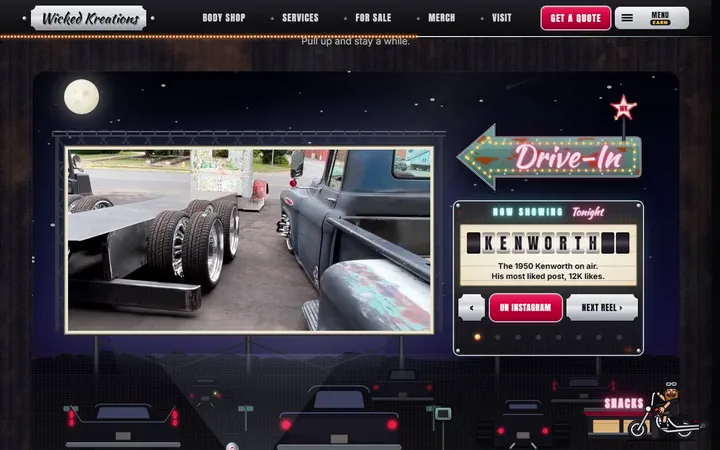
Here is a shop that lives on this. Cody at Wicked Kreations in Lincolnton builds custom cars, and his reels do the talking on TikTok, Instagram and Facebook. When I built his site, I put those reels on a drive-in screen right on his own page, so they keep working after the apps move on.
When they ask "how much?"
Someone will comment asking the price. How you answer is a post of its own, because everyone else reading is wondering too. Reply fast and friendly. Give a range or what changes the price. Then move it to a message.
Comments
How much for something like this?
Good question! Most decks this size land in a range depending on the boards and the height off the ground. Send me a photo of your spot and I can give you a real number.
Ok sending you a message now
Ignoring the question looks like you are hiding something. Arguing about price in public is worse. And when they message you, answer fast, because the contractor who answers first usually gets the job. Here is why.
Be useful in local groups
Town Facebook groups and Nextdoor are where neighbors ask "anyone know a good electrician?" Answer questions there even when there is no job in it. Explain why a breaker keeps tripping. Say what a fair price looks like. Thank people who tag you.
Read every group's rules before you post anything about your business. Many only allow business posts on one day a week. Posting ads where they are not allowed gets you removed, and some apps will flag your account for it.
A post gets seen for a day. A Google review works for years.
Turn happy comments into reviews
When a customer comments something nice, thank them, then send them your Google review link in a message. A review on your Google profile keeps helping you show up in the map results long after the post is gone. How to get more Google reviews has the exact text to send and what Google does not allow.
Where the posts should send people
Every good post ends the same way: somebody goes to look you up. They search your name, tap your Google listing, then tap through to your website. If that site is slow, out of date, or missing, a lot of them stop right there.
So check what they will find:
When someone looks you up after a post
- Your Google listing has the same name, phone and hours as your posts
- Your website shows the same kind of work you post, with real photos
- The phone number taps to call on a phone
- There is a short quote form that takes photos and reaches you fast
- The towns you post about are named on the site
What to stop posting
- Your logo on a colored background.
- "Call us today!" flyers with no job in them.
- Holiday graphics that have nothing to do with your work. One a year is fine.
- Stock photos of tools, hard hats or smiling models.
- Reposts with another app's watermark on them.
Every one of those takes the spot of a post that could have shown your work. If you are not sure where to start, the free site check shows what people find when they look you up after a post.
Quick answers
What should a contractor post on Facebook?
Your real jobs. A before and after from the same spot, a short clip explaining what you found, your crew and truck on site, and a caption that names the town. Skip logo graphics and stock photos.
Should I post prices on social media?
You do not have to post a number. When someone asks in the comments, answer kindly with what changes the price and invite them to message you for a real quote. Ignoring the question looks like hiding.
Is it OK to post in local Facebook groups?
Read each group's rules first. Many only allow business posts on one day of the week. Answering questions helpfully, without a sales pitch, is almost always welcome and brings in more work anyway.
Do I need to post every day?
No. Two or three real job posts a week, every week, all year, does more than daily posts for one month. Pick a pace you can hold in your busiest season.
Should I show the customer's house?
Ask first. Leave out house numbers, street signs, plates and faces unless they say yes. Close shots of the work are usually all you need.