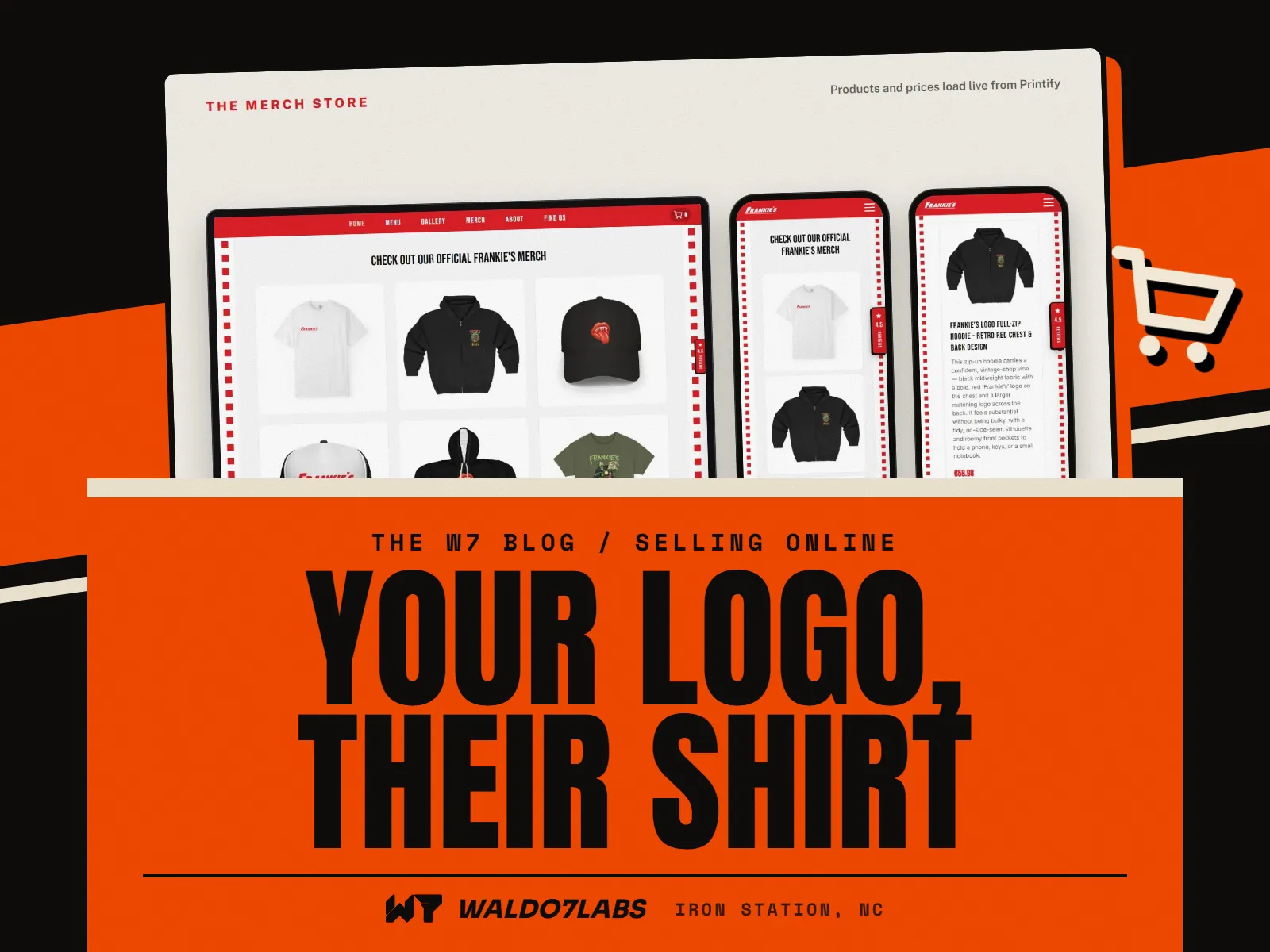
Your regulars already like you. Some of them would happily wear your name on a shirt, a hat or a hoodie. A car shop with a following, a pizza place with a loyal crowd, a gym, a brewery, a team, a church: all of them can sell merch.
The old way meant ordering a box of 72 shirts, guessing the sizes, and finding out which ones nobody wanted. The new way means nothing gets printed until somebody pays for it. Here is how both work, which one fits you, and how to set it up so it actually earns something.
Two ways to make merch
| Bulk order | Print on demand | |
|---|---|---|
| How it works | You order a batch up front from a local print shop | Each piece is printed after a customer orders it |
| Money up front | Yes, the whole batch | None. The print cost comes out of each sale |
| Cost per piece | Lower, more so on big orders | Higher, since every piece is made one at a time |
| Leftover stock | Common. Wrong sizes sit in a closet | None |
| Who ships it | You, or you hand it over the counter | The print company ships to the customer |
| Best for | Events, team orders, a counter display | An online store that runs on its own |
Plenty of shops do both. A batch of shirts for the counter and the local festival, and a print on demand store online for everyone else. If you only pick one to start, start with print on demand. You cannot lose money on stock you never bought.
What I have actually built
I run my own store this way, and I have built merch into client sites. Here is what those really look like.
Wicked Kreations: his builds, on shirts
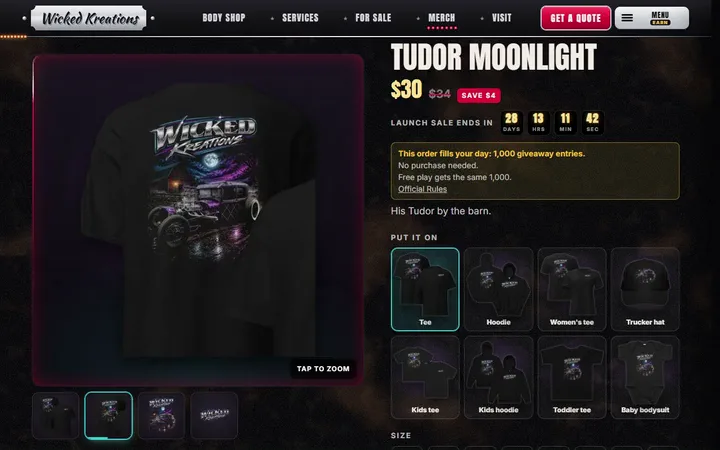
Cody at Wicked Kreations in Lincolnton builds custom cars and rat rods. His merch is his own builds on tees, hoodies and hats, with kids' tees and baby bodysuits too. A button called Put it on shows one design on every piece, and the price changes with each one. Printful prints and ships every order. He keeps no stock.
Frankie's Slice Shop: a store that fills itself in
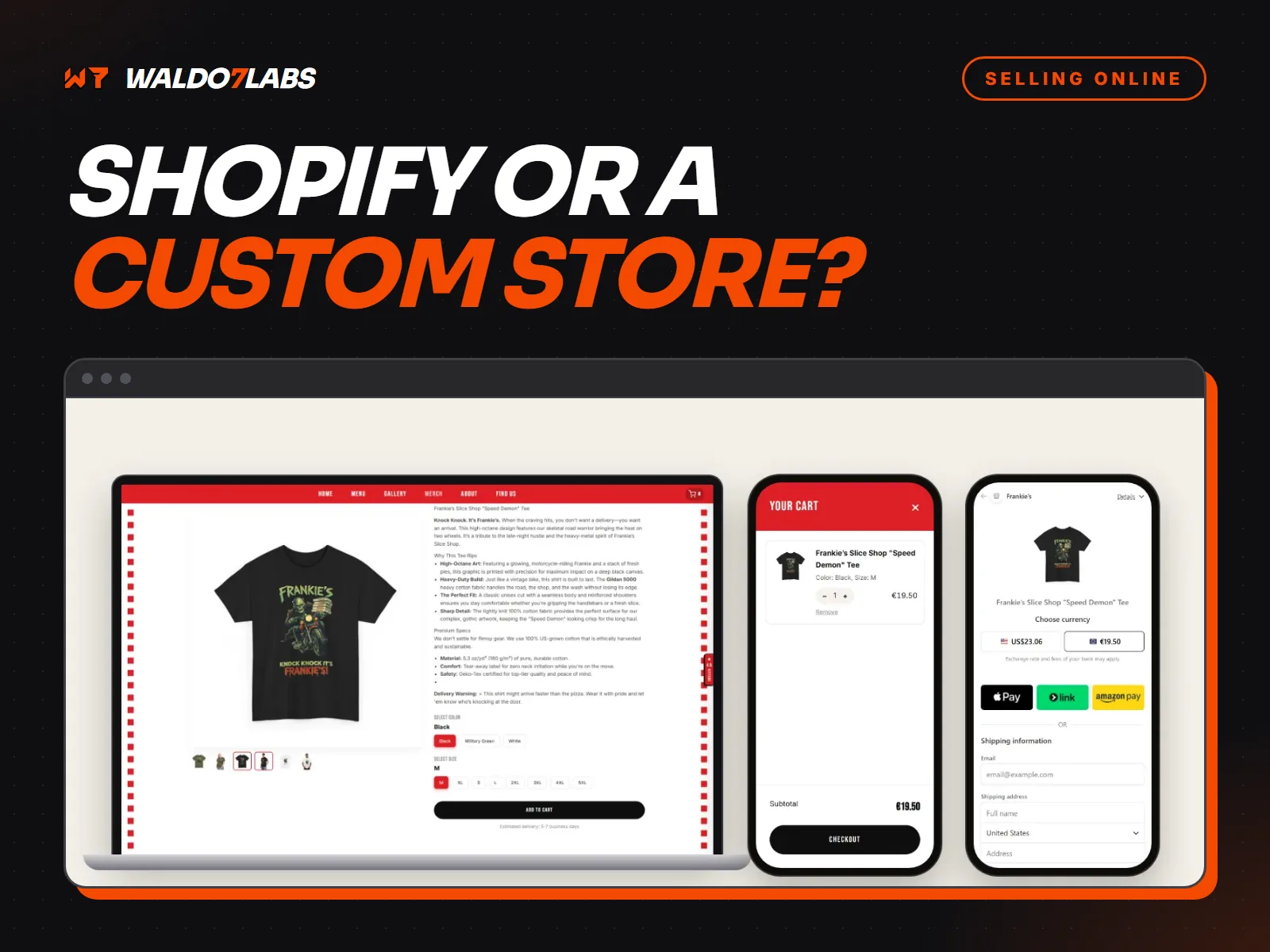
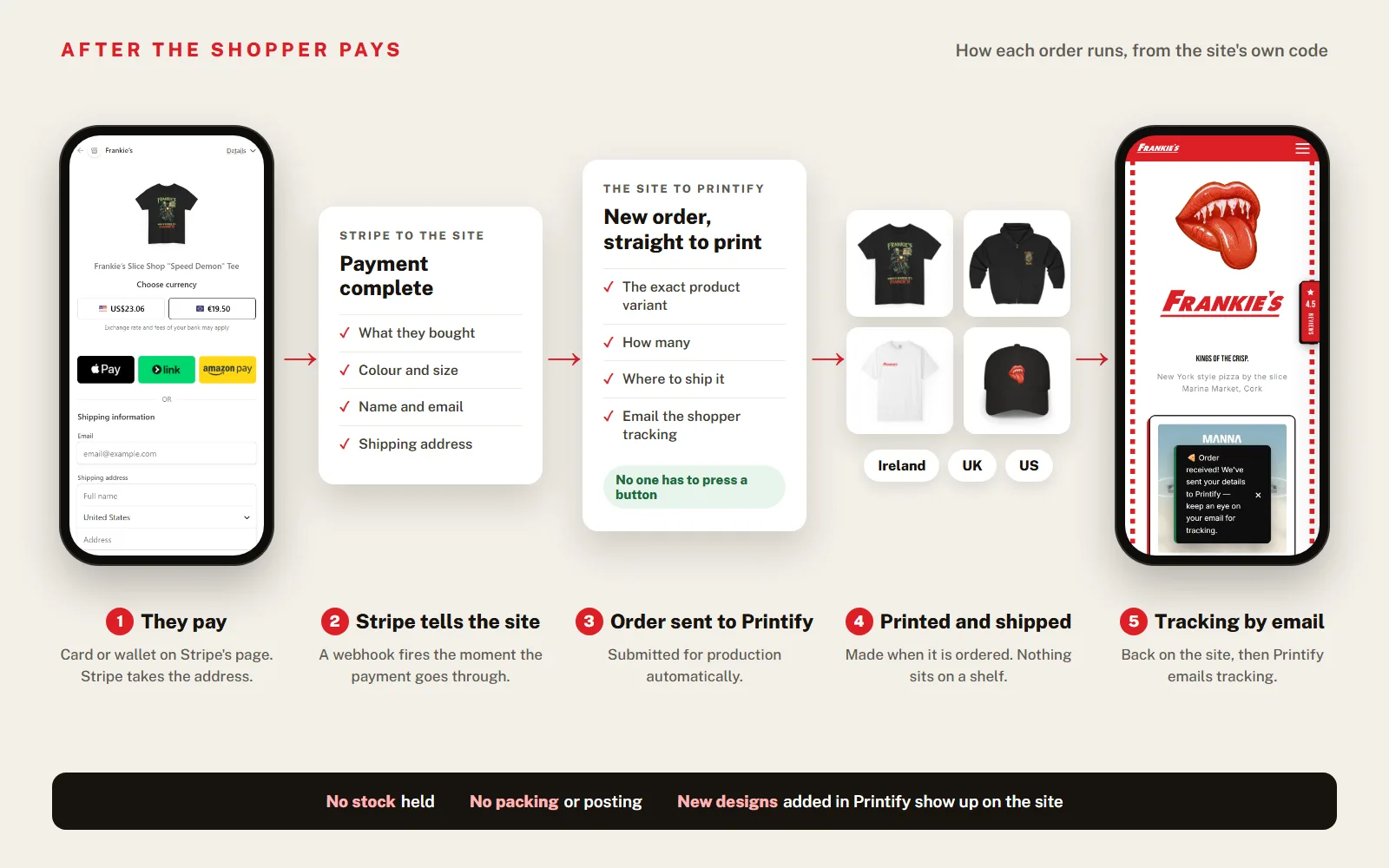
Frankie's sells New York style slices in Cork, Ireland. Their merch store reads products straight from their print account, so a new design added there shows up on the site with its photos, colors, sizes and price. When a payment goes through, the order goes to the printer on its own, and it ships to Ireland, the UK or the US. The shop never packs a parcel.
KollectNoir: art people already love
Alan at KollectNoir builds handmade horror movie dioramas. His merch is his own cult horror art, printed to order on shirts, hoodies and trucker hats under the KN Video name. Shoppers filter by type, and joining his email list spins a wheel for money off a first piece. More on the KollectNoir build.
Designs people will actually wear
This is where most local merch goes wrong. A shirt with your logo dead center, in the same colors as your sign, is a uniform. Your crew will wear it. Your customers mostly will not.
People buy shirts that say something about them. Here is what works.
- Inside jokes the town gets. The road everyone sits in traffic on. The thing every local says. A local joke beats a plain logo.
- Your best work as the art. Cody's builds are the designs. A bakery's best cake, a shop's best truck, a farm's best field. Real things, drawn well.
- Your logo small. A small mark on the chest or the back of the neck. The design does the talking, the logo signs it.
- Simple and readable. Big shapes, few colors, words you can read from across a parking lot. Tiny detail disappears in print.
- Fewer, better pieces. Five good designs beat thirty average ones. Cut the weak ones.
People do not buy your logo. They buy something they want to wear that happens to say your name.
Pricing so it earns something
Print on demand costs more per piece than bulk, so price with your eyes open. Here is the math on any item:
- Start with the print company's cost for that exact item and size.
- Add the card fee. Stripe's standard US rate is 2.9% plus 30 cents per payment.
- Add the profit you want per piece.
- Decide on shipping: charge it at checkout, or build it into the price.
On my own store I keep the profit small, a few dollars a piece, so the prices feel fair and people actually buy. For a local business, merch is more about getting your name walking around town than about the margin. A fair price that sells beats a big markup that sits.
Bigger sizes and hoodies cost more to make, so the price should go up with them. Do not lose money on every 3XL.
Taxes, in plain words
Merch is physical goods, and in North Carolina sales tax applies to it. That means you will likely need to register with the state and collect tax on orders. When you buy the shirts from a printer to resell, there is a form that keeps you from being taxed twice. I am not your accountant, so talk to yours before you open. It is a short conversation, and it saves a headache later.
How an order runs, start to finish
- Customer
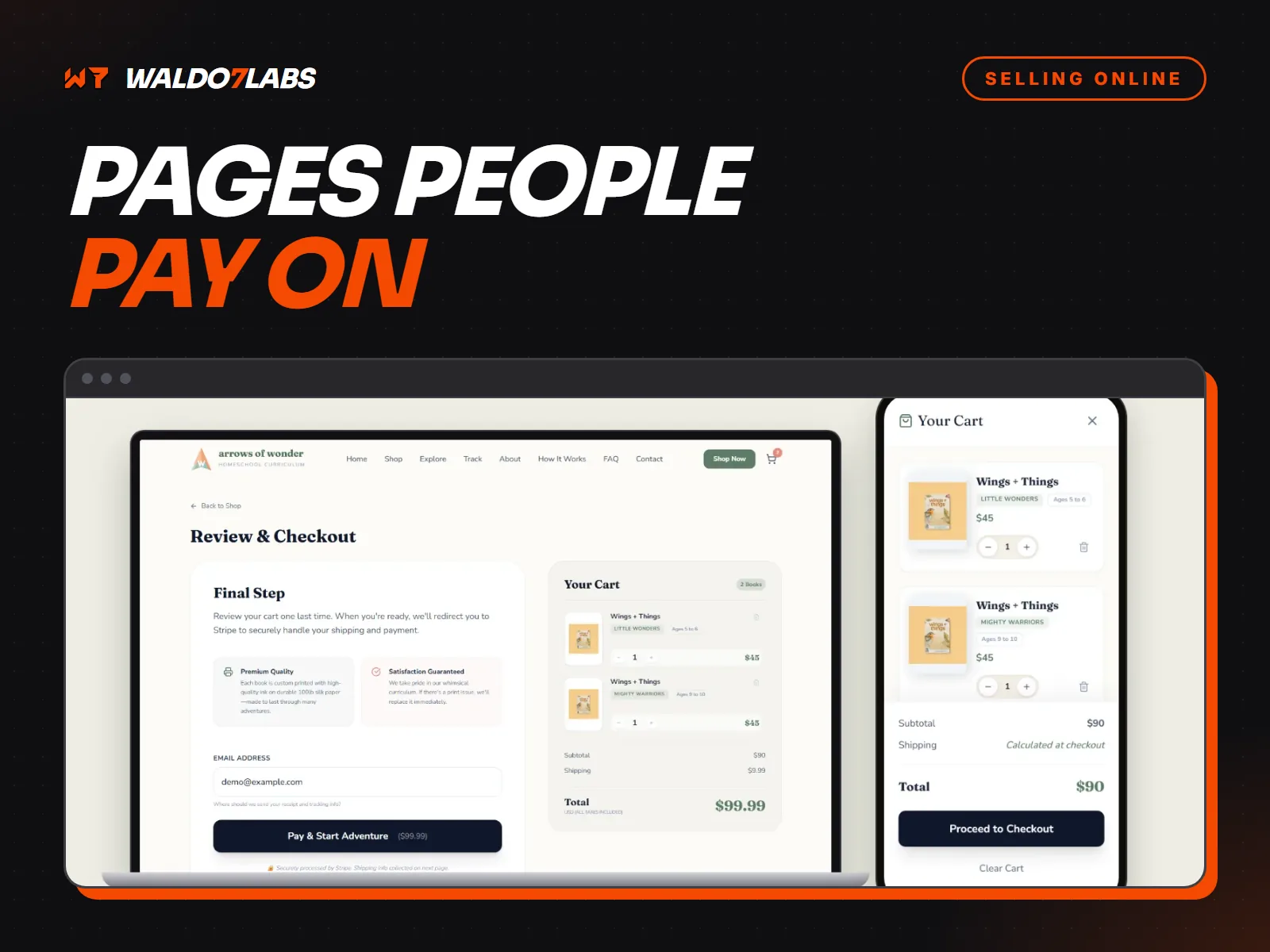
Picks a design, a color and a size on your site, then pays on a Stripe checkout page.
- Your site
Hears from Stripe that the payment went through and sends the order to the print company with the exact item and address.
- Printer
Prints it, packs it and ships it. The customer gets tracking by email.
- You
Get the money in your Stripe account, minus the card fee. The print cost for that order is paid from the sale.
Nothing in that list needs you to stop work. That is the whole point.
Getting started
Pick five pieces
A tee, a hoodie, a hat, and two more that fit your crowd. Kids' sizes if families come in. Start small.
Make three or four real designs
One local joke, one built from your best work, one clean logo piece. Get honest opinions from regulars before you print anything.
Get real product photos
Every item shown the way it ships. Print companies give you mockups to start, and photos of the real thing come later.
Set prices with the math above
Cost, card fee, profit, shipping. Write it down for each size.
Put it where people already look
A shop page on your own site, a link in your Google profile, a QR code at the counter. Tell people it exists.
Want it built for you? A Merch Shop on a W7 site starts at $395 to set up. It includes a shop page, 5 to 8 products with your logo, Stripe checkout to your own account, Printful making and shipping each order, and photos of every product. No W7 site, or keeping the one you have? A Standalone Merch Store on its own link starts at $1,495. Current prices are always on the pricing page.
If you are weighing a full online store instead, my post on Shopify vs a custom store covers that choice, and taking payments on your website covers the checkout side.
Quick answers
What is print on demand merch?
Each shirt, hat or mug is printed only after someone orders it, then shipped straight to that customer by the print company. You never buy stock, store boxes or pack anything.
Do I have to buy inventory to sell merch?
Not with print on demand. You pay the print company's cost for each item only when a customer has already paid you for it.
How much profit is there on a print on demand shirt?
Less per shirt than bulk, because you pay more per piece. You set the price, so you choose the margin. I price my own pieces at the print cost plus a few dollars, enough to cover card fees and leave a small profit.
Do I charge sales tax on merch in North Carolina?
Merch is physical goods, and North Carolina sales tax applies to it. How you register and collect depends on your business, so talk to your accountant before you open the store.
Can I sell merch without a website?
You can sell through a print company's own storefront or a marketplace, but you give up the customer list and your own look. I build a Merch Shop onto a W7 site, or a Standalone Merch Store on its own link starting at $1,495.